KKOP drone permit Bali means formal approval to fly inside the 15 km airport safety zone around Ngurah Rai, where unapproved drones risk up to 3 years’ jail and Rp1,000,000,000 fines under Indonesian aviation law. Our team typically secures KKOP and Flight Security Clearance in 14–30 working days for compliant projects.
What exactly is KKOP around Bali airport and why is a special drone permit mandatory?
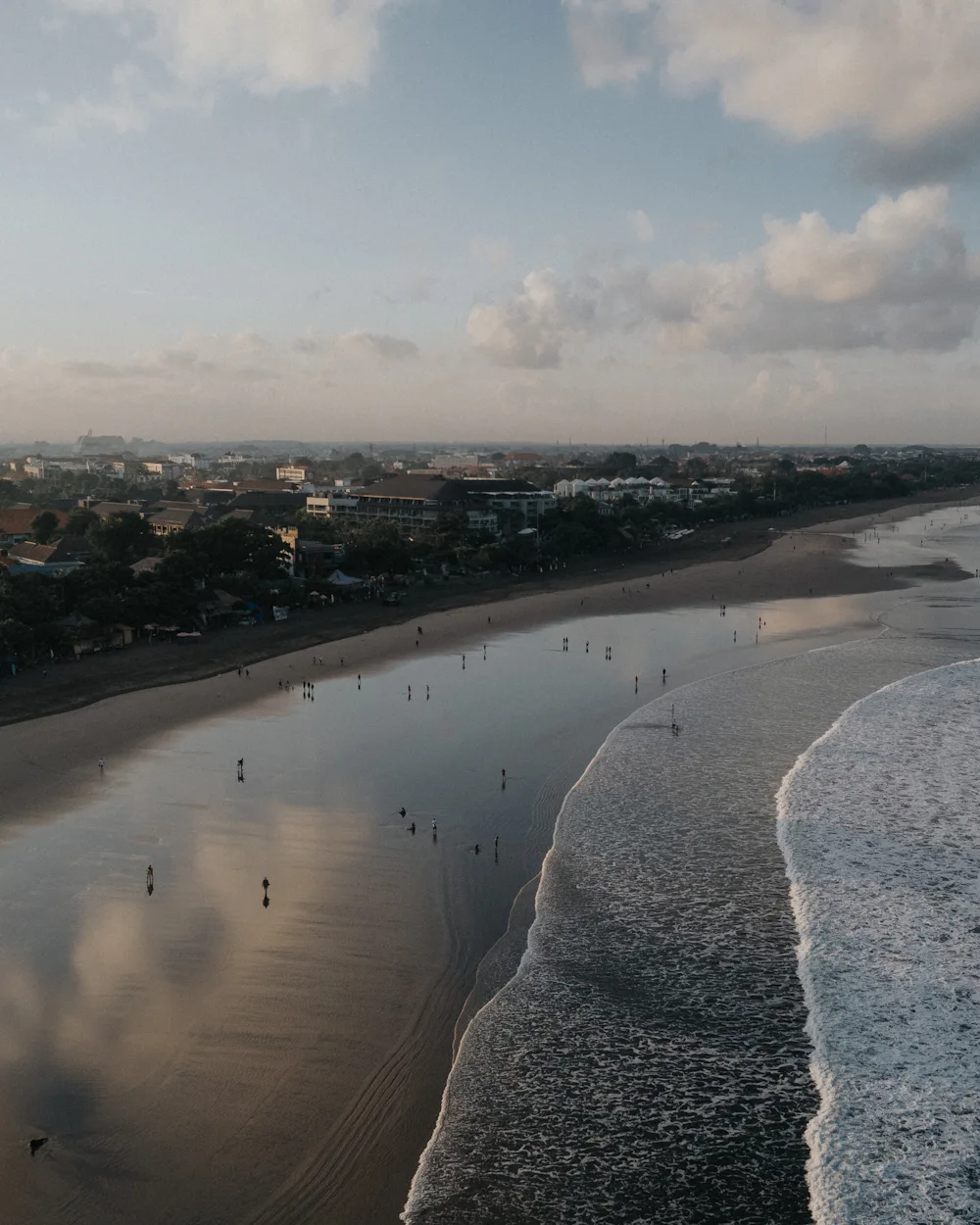
KKOP (Kawasan Keselamatan Operasi Penerbangan) is the aviation safety area around an airport, defined in Indonesian law (UU No. 1 Tahun 2009 and PM 90 Tahun 2015). Around Ngurah Rai International Airport in Bali, practical guidance and tourism advisories describe a 15 km no-fly buffer that covers Kuta, Seminyak, Jimbaran, Nusa Dua and much of South Bali’s coastline.
Any drone activity in this airspace without written approval from the airport authority and Directorate General of Civil Aviation (DGCA) is prohibited. Violations that endanger flights can trigger bali drone criminal charges risk of up to three years’ imprisonment and fines reaching Rp1,000,000,000 under national aviation law. That risk applies even to under 2kg drone operations Bali visitors often bring for casual filming.
Legally, KKOP airspace is managed through controlled and restricted zones, and drone flights here must route through AirNav Indonesia, local airport authorities and the SMS-FSC digital Flight Security Clearance platform. As an independent civilian service company, part of Juara Holding Group since 2015, this is exactly where structured permit handling reduces risk and keeps productions on schedule.
How does professional KKOP permit handling reduce the chance of Bali drone permit denial?
KKOP approvals fail most often due to incomplete data, poor risk mitigation and unclear flight profiles. To reduce risk of Bali drone permit denial, each project is built around a formal risk package aligned with PM 37 Tahun 2020 and AirNav expectations, then submitted only via official written channels: DGCA/DKPPU, AirNav/LPPNPI, airport authority and SMS-FSC for FSC.
For each site near Ngurah Rai, a custom Bali airport KKOP map for drone pilots is prepared, showing proximity to runway centerlines, approach/departure paths and any restricted or prohibited areas. This directly informs altitude limits, timing windows and emergency procedures. The closer a site is to the runway axis or critical approach sector, the more conservative the flight design becomes.
As of August 2026, KKOP-focused permit chains for commercial filming in South Bali usually need 30–45 working days, especially for night shoots or events. For lower-risk sites at the fringes of the 15 km buffer with clear lateral separation from approach paths, 14–21 working days is typical. Projects under tight deadlines are steered toward our bali drone permit express processing option, outlined in detail on the dedicated service page.
What risk assessment and safety planning are needed for KKOP drone flights in Bali?
Inside KKOP, risk assessment is not a formality; it is the core of the approval. Each submission uses a structured Bali drone risk assessment template covering airspace classification, ground risk, crowd density, infrastructure sensitivity and seasonal weather (dry vs monsoon). This mirrors what regulators expect around airports and busy tourist corridors.
Monsoon winds and drone safety Bali-wide are a key focus between roughly November and March, when gusty crosswinds, sudden rain and low cloud make controlled flight and GNSS reliability more challenging. Dry season drone operations Bali-side, usually from April to October, reduce weather-related risk but increase issues like dust ingestion on take-off zones and higher temperatures affecting batteries.
For complex shots such as bridge flythrough drone safety Bali projects near highway overpasses or coastal bridges, extra analysis covers obstacle clearance, vehicle and pedestrian traffic patterns, and strict abort corridors. Battery cycle logging for drone safety Bali operations is set as mandatory across KKOP sites so that every pack used around the airport has documented cycles, voltages and temperatures, supporting both reliability and audit trails should authorities request data after a flight.
How are crews prepared and controlled on the day of a KKOP drone operation?
On-site discipline is scrutinised heavily by airport security, police and aviation stakeholders. Every KKOP operation starts with a structured Bali drone crew safety briefing that includes site layout, safe zones, propeller-arming rules, hand signals and direct coordination lines with security officers. Visitors and non-essential crew are assigned observation areas away from the take-off/landing pad.
For priority handling for high risk drone sites Bali, such as rooftops in Kuta within direct line of sight of the runway or hotel venues overlooking approach paths, local coordination can include Bali police escort for drone operations where law enforcement presence is requested by the authorities or the client. This demonstrates active crowd control capability, especially on public beaches and road shoulders.
Police drone operations Bali themselves must also co-exist with civil permits. Where government or police aircraft are flying in the same corridor, ATC-led deconfliction is required, and civil drones can be grounded temporarily. Ground marshals, updated NOTAM reviews and clear abort terms are built into the briefing, so any change in airport operations or weather can halt flights instantly without confusion.
What support can Drone Permit Bali provide before and after filing KKOP applications?
Project owners often need to align KKOP compliance with brand guidelines, agency deliverables and multi-country shoots. For international campaigns, planners are guided through the bali drone permit checklist for international brands 2027 so creative directors, legal teams and insurers all understand what is possible around the airport buffer before signing off storyboards.
Pre-filing, Bali drone safety guidelines for tourists and visiting creators are shared, explaining why casual flights from hotel balconies in Seminyak or Kuta beach are illegal within the 15 km zone, and what alternative locations outside KKOP are safer. This reduces the chance that visiting crew fly informally while formal permits are still pending, which could jeopardise future approvals for the same brand.
During and after filing, productions receive Bali drone permit email support for document updates, schedule changes and authority clarifications. For Korean agencies and crews, bali drone permit korean language support is available for key written explanations and checklists, helping producers communicate requirements cleanly to local stakeholders. Post-flight, logs, incident reports (if any) and video evidence of compliance can be compiled for insurers and internal EHS teams.
What types of operations in KKOP can be supported, from tourists’ small drones to big commercial shoots?
Most approved KKOP flights are commercial: TVCs, tourism campaigns, resort launches or large events including drone shows. For these, the full chain from DGCA exemptions, AirNav assessments, airport approvals, NOTAMs and FSC via SMS-FSC is coordinated end-to-end, mirroring processes used for larger aerial events in Bali.
Under 2kg drone operations Bali visitors bring — like compact prosumer aircraft — can also be included in a professional permit package, but approvals are granted only if flown by or under supervision of licensed operators with full documentation. Weight alone does not remove KKOP obligations.
In speciality cases, such as bridge flythroughs near toll roads or coastal bypasses, or complex camera paths above marinas, KKOP permitting requires additional liaison with local government and facility owners. For high-profile event airspace overlaps, including nights where drone shows operate near the airport buffer, planners may also need to track updates on bali drone permit regulations 2027 update to stay aligned with evolving national rules and digital systems.
- Regulatory basis: UU No. 1 Tahun 2009, PM 90/2015, PM 37/2020 governing KKOP and controlled airspace operations.
- Typical lead time: 14–21 working days for simpler fringe-KKOP sites; 30–45 days for complex airport-adjacent venues (as of August 2026).
- Permit chain: DGCA/DKPPU, AirNav Indonesia, airport authority approvals, NOTAM where required, and FSC via SMS-FSC.
- Documentation: risk assessment, flight profiles, pilot credentials, insurance, site owner consents and battery cycle logs.
- On-site controls: structured crew briefings, security integration and, where requested by authorities, police escort arrangements.
- Support channels: Bali drone permit email support plus multilingual coordination including Korean-language guidance.
- Scheduling: detailed slot planning around peak arrivals/departures, monsoon gust patterns and community event calendars.
Frequently asked questions
how much does kkop drone permit bali cost in Bali?
Costs are quote-based and vary widely by risk level, location and urgency. As of August 2026, budgets for straightforward KKOP filming near the 15 km boundary may sit in a mid-range band, while high-risk, short-notice or complex multi-day operations near key approach paths can require significantly higher allocations for coordination and compliance.
is kkop drone permit bali worth it in Bali?
For any project near Ngurah Rai, proper KKOP permitting is strongly advisable. It reduces exposure to Bali drone criminal charges risk, protects brands from negative headlines, and ensures insurance remains valid. For commercial shoots, the permit cost is small compared with talent, location and media buys, and helps keep airport and police relations positive.
what is included in kkop drone permit bali?
KKOP handling includes airspace analysis using a Bali airport KKOP map for drone pilots, preparation of a Bali drone risk assessment template, document collation, submission through DGCA, AirNav and airport channels, FSC via SMS-FSC, and operational planning such as Bali drone crew safety briefing content. Optional services include on-ground coordination and police escort arrangements when requested.
Can tourists fly personal drones in KKOP if they are under 2 kg?
No. Drone weight does not remove KKOP restrictions. Even under 2kg drone operations Bali-wide are banned in the 15 km no-fly buffer around Ngurah Rai without formal approval. Tourists should follow Bali drone safety guidelines for tourists and either join a licensed operator’s permitted shoot or move to legal locations outside the defined airport safety zone.
How do seasons like dry months or monsoon impact KKOP permit planning?
Dry season drone operations Bali-side (commonly April–October) usually provide more predictable flying days, but heat and dust affect batteries and optics. Monsoon winds and drone safety Bali-wide (often November–March) are a concern due to gusts, rain and cloud ceilings. Permit windows and risk assessments are therefore built around seasonal weather data and alternative dates.
For KKOP drone permit handling in Bali, share site pins, dates and flight concepts via WhatsApp 6281139414563 or email bd@juaraholding.com (BD desk Juara Holding Group); for urgent timelines, request bali drone permit express processing in your first message.
Last updated 4 August 2026