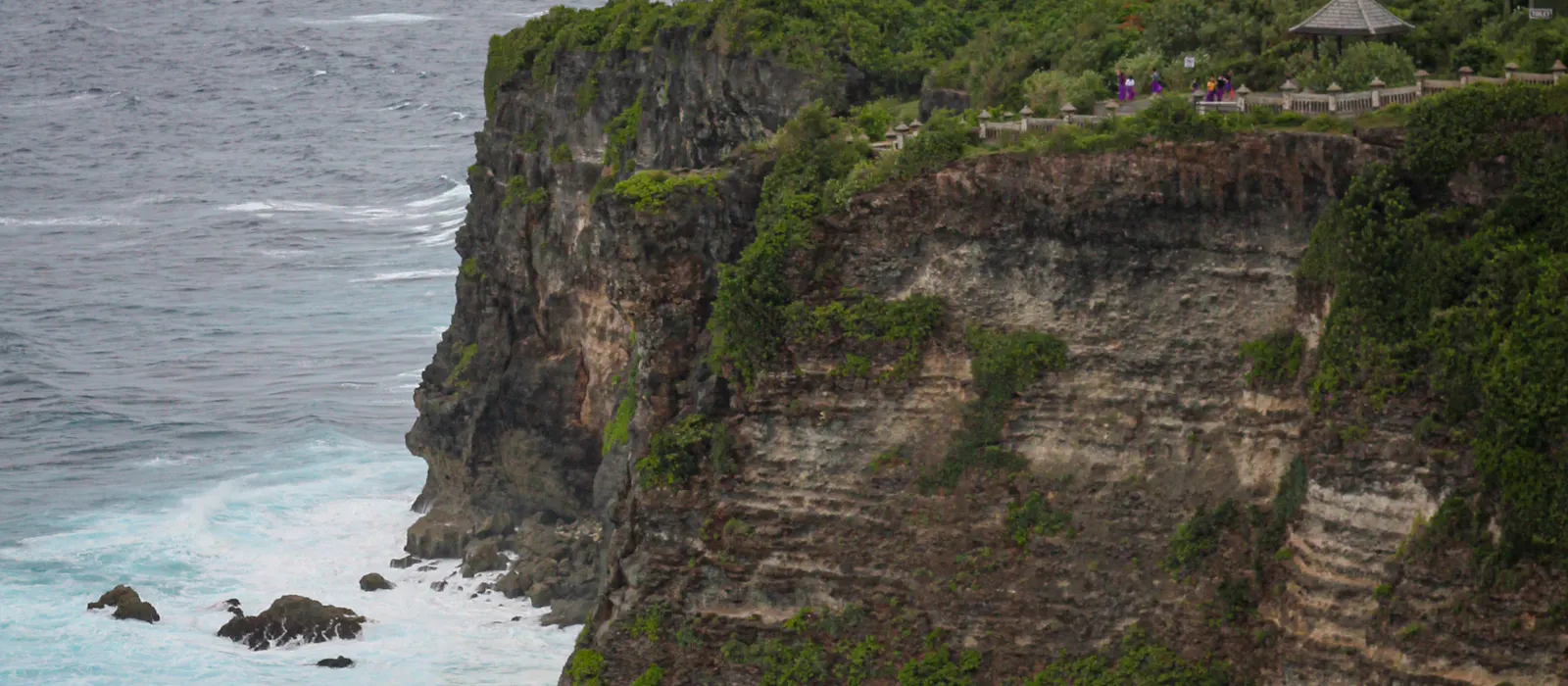
Lowest band
Open rural
14working days
Outside the 15 km buffer, low crowd density, no critical infrastructure. Standard filing to DGCA and AirNav, venue consent where the land is private.
Standard permits 7–14 working days · KKOP zones 30–45
Weddings · Festivals · Galas
Weddings, festivals, marathons and corporate galas. 10–21 working days, with airport, AirNav and local coordination for any venue inside the 15 km safety radius.
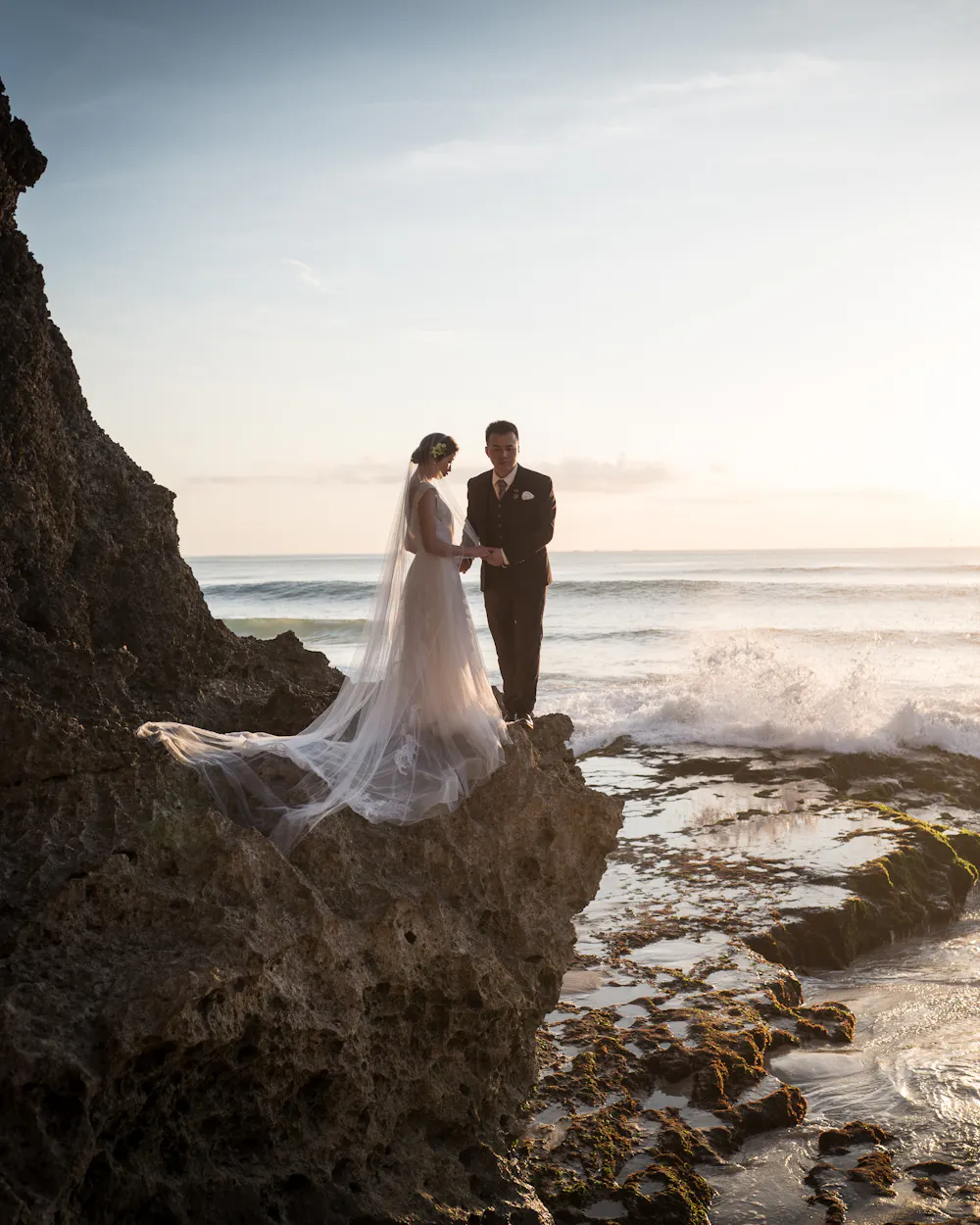
Kuta, Seminyak, Nusa Dua and Jimbaran sit inside the airport buffer. Most of Bali's wedding and gala venues need a permit, not a venue sign-off.
Location risk
Venues are grouped by airspace and ground risk before anything is quoted. The tier decides the lead time, the paperwork and whether on-site compliance is needed.
These are lead times, not prices. Every event is quoted per project — the figures above tell you how early to start, not what it costs. As of August 2026.
The workflow
Planners usually arrive with dates, venue coordinates, expected crowd size and the shots they want. That is enough to start.
One to three days. A flight concept and airspace check against UU No. 1/2009 and PM 90/2015 on prohibited, restricted and KKOP areas.
At least 14 working days before the event, to DGCA and AirNav. Inside KKOP, a specific application to DGCA/DKPPU and the airport authority.
Local government or venue approvals where the site or the crowd requires them, filed alongside the aviation chain rather than after it.
AirNav's own review. For KKOP or security-sensitive sites this adds SIT meetings and FSC via SMS-FSC, and stretches the window to 30–45 days.
You receive digital copies of everything filed, including approvals and correspondence. For events that also need crew and gear, the same workflow can run alongside full production support.
Authorities can ask to see proof of permission at any point, and large public events attract the most checks. Carry printed packs in English and Bahasa Indonesia, with a PDF backup on a phone, so marshals, venue security and police can verify the essentials without stopping the schedule.
Two printed sets is the working standard: one with the drone pilot, one at event control. Separate them by day and by location, and bookmark the digital copies — time-sensitive windows like fireworks or a VIP movement are exactly when a search through a folder costs you the shot.
For KKOP venues, keep everything in a single project folder with the KKOP approval on top, and name one on-site compliance contact. That person handles every conversation with aviation or security officers while the production team runs the event.

Three arrangements that suit recurring events rather than one-offs.
Documentation kept current across a season of races or a touring festival, so each filing starts from live data.
One campaign framework for a tour. Each city still issues its own approvals, but the aircraft, operator and safety case are filed once.
Every filed document in both forms, organised by day and location for on-site verification.
Venue coordinates, date, expected crowd size and the shots you want. We come back with the risk tier, the lead time and a quote.